
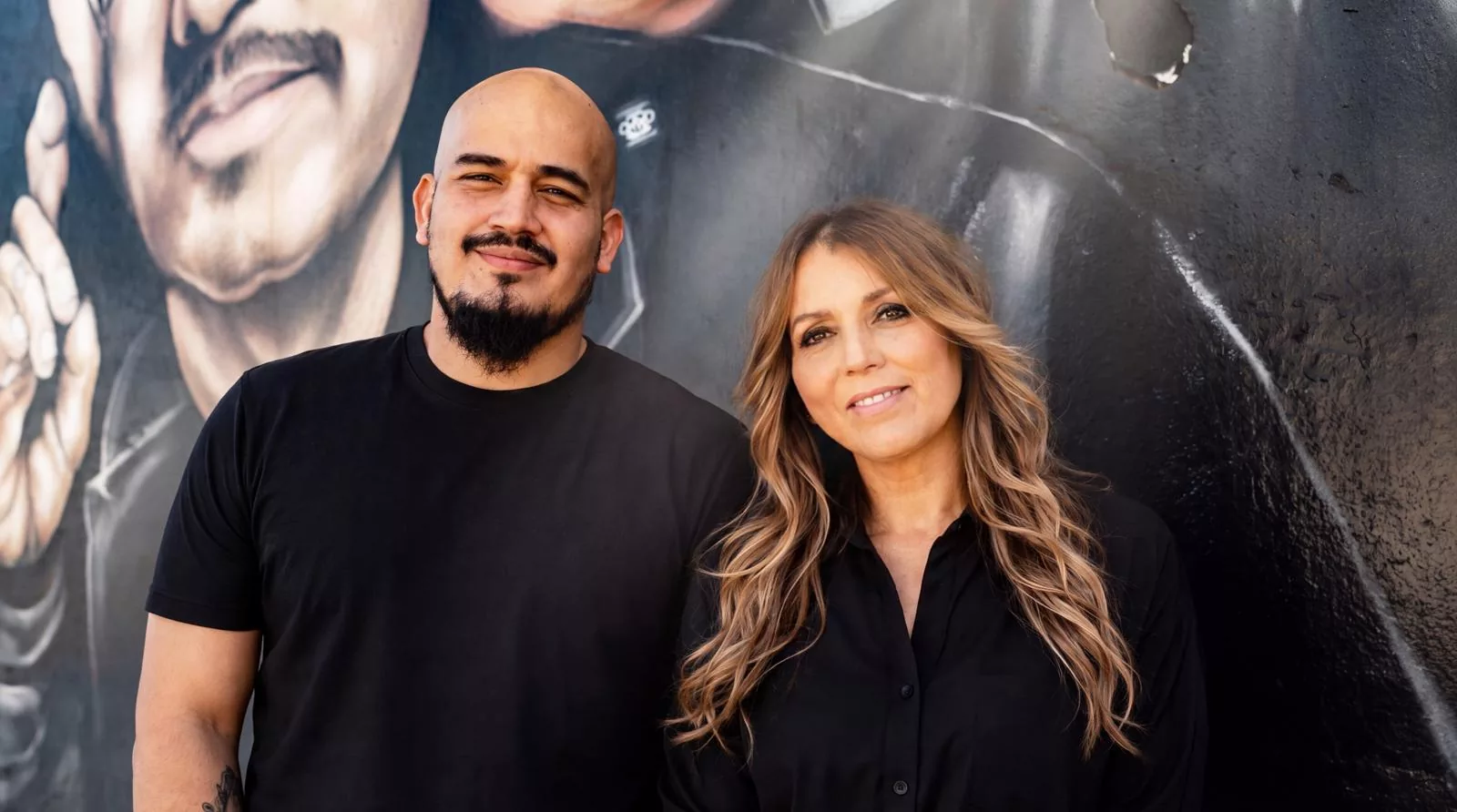
When Lucía Marinelli arrived in Miami from Milan in 2015, she brought with her far more than the desire to start a new life. She brought ideas, determination, and a very particular way of understanding business: for her, being an entrepreneur was never just about selling a product — it was about creating experiences capable of bringing people together.
Sweet in manner but firm in her convictions, Lucía left Italy ready to explore new markets and turn her ideas into real projects. As happens with so many immigrants, the road wasn't free of uncertainty. Arriving in a new country meant learning new dynamics, understanding a different business culture, and carving out space for herself in a competitive city like Miami.
Along the way, she met Juan Peñaloza — Venezuelan, a chef, an entrepreneur, and the man who would later become her husband and business partner. Their stories, though born in different countries, found common ground: the desire to build something of their own, far from home.
Lucía carried with her the flavors of Italy; Juan brought the culinary richness and adaptability of his Venezuelan upbringing. The blend of those two cultures would go on to become their first project together.
A Dream Called Made in Italy
The idea was born, literally, from a dream Lucía had.
In 2017, the couple launched the Made in Italy food truck in Edgewater — a concept created to share a piece of Italian food and culture with Miami, combined with Juan's Venezuelan experience and roots.
The menu offered Neapolitan-style pizzas, Angus beef burgers, and empanadas. Lucía described it as a tribute to her roots and to Italian cooking, but behind the dishes was also a story much like that of thousands of immigrant entrepreneurs: long workdays, limited resources, and the constant need to make themselves visible.
Made in Italy let them experience firsthand the joy of sharing food with a community. It also taught them, up close, just how hard it can be for a small business to find the right places to sell, build a loyal customer base, and grow sustainably.
Lucía worked different markets as a vendor herself. The experience, though, wasn't always a good one. In some places she found few tools to help her grow and a distant relationship with the people running the events. Rather than feeling part of a community, a vendor often seemed to be little more than someone paying to occupy a spot.
That reality left behind a concern that, over time, would grow into a new vision.
“I spent time going from market to market and didn't have good experiences on the vendor side. The tools to grow were very limited.” — Lucía Marinelli
Instead of giving up on the idea, Lucía and Juan set out to ask themselves what a market would look like if it were built from the real, lived experience of the people behind every stand.
Building the Market They Would Have Wanted to Find
After Made in Italy came the first temporary markets, organized by Lucía. Each one was a space to learn and, at the same time, a chance to put a simple philosophy into practice: treat both the visiting community and every entrepreneur with love and respect.
That's how EastCoast Marketplace began to take shape.
Juan brought his experience as a chef, a food-business owner, and a vendor himself. Lucía took on building the concept, the relationships with entrepreneurs, and the vision for growth. Together, they understood that behind every table, tent, or product is a person who has invested time, savings, and hope — and in many cases, a family that depends directly on that business.
EastCoast Marketplace wasn't born just as a place to shop. It came about as an answer to a need its founders had lived firsthand.
“What really sets us apart is our commitment to building something with real social impact.”— Lucía Marinelli
That vision found its ideal home at Margaret Pace Park. In 2025, Lucía partnered with Miami's District 2 City Commissioner, Damian Pardo, and with the City of Miami to launch a market aimed at supporting entrepreneurs and strengthening neighborhood life.
Facing Biscayne Bay, amid music, families, pets, aromas, and small businesses, the park began taking on a new rhythm on Sundays. Little by little, visiting the market stopped being an occasional outing and became a routine for many residents.
“We constantly hear from the community, thanking us for creating a space where they can enjoy high-quality food, live music, activities, and a vibrant atmosphere in one of the most beautiful spots in Miami.”— Lucía Marinelli
The water, the openness of the park, and neighbors coming together create a feeling that's hard to find anywhere else. In an area otherwise dominated by residential buildings, the market gives people back the chance to recognize themselves as a community.
“There's something special about being on the bay. It creates an experience you can't find just anywhere.” — Lucía Marinelli
A Market with Purpose
EastCoast Marketplace's social commitment shows up in concrete decisions. Every week, free spaces are set aside for nonprofit organizations, giving them a chance to connect with the community and bring visibility to their causes.
“A market should also give something back to the community.”— Lucía Marinelli
That same conviction gave rise to the Young Makers Hub, one of the market's most distinctive programs: a dedicated space where children create their own products, display them, and sell them directly to market visitors. There, they get to experience — maybe for the first time — what it means to imagine an idea, turn it into something real, and present it to other people.
“It's about building confidence and creativity, and teaching them that they can create something on their own.” — Lucía Marinelli
The program isn't just about shaping small-time vendors. It's about planting the seeds of autonomy, curiosity, and an entrepreneurial mindset from an early age.
Over time, the selection of vendors also evolved into a carefully built ecosystem. Many businesses come back week after week, building bonds with their customers and collaborative relationships with other entrepreneurs.
That consistency is an essential part of EastCoast Marketplace's identity. It isn't about filling spaces with different stands every Sunday — it's about building a stable network of brands that can grow alongside the market.
When Selling on a Sunday Can Support a Family
For visitors, walking through the market can feel like a pleasant stroll along the bay. For many vendors, though, what happens during those hours carries a much deeper meaning.
“The market works as a genuine launchpad — and survival platform — for many small businesses. Behind many of our vendors are families who have built something from nothing.”— Lucía Marinelli
In some cases, the money made over the weekend isn't extra income — it's an essential part of the family's livelihood. That's why offering a stable calendar, visibility, and direct contact with buyers can make the difference between an idea that fades away and a business that manages to take hold.
That need is even more evident in a city like Miami, where costs keep rising and access to a physical storefront can be out of reach for an entrepreneur who's just starting out.
EastCoast Marketplace lets vendors test products, listen to customers, adjust prices, refine their presentation, and build an audience. It's a kind of open-air business laboratory — but also a place where entrepreneurs discover they're not alone.
Growing Also Means Learning
Lucía and Juan's own story taught them that having a place to sell is important — but not always enough. A business can have an outstanding product and still fail for lack of structure, business know-how, or the tools to make better decisions.
For that reason, EastCoast Marketplace has begun building alliances that expand the support offered to its vendors. Among them is the Hello Marketeros program, which will be introduced soon and aims to become a training and growth platform for entrepreneurs ready to take on the challenge of strengthening their brands.
The intention is for every vendor to not only have a booth during the weekend, but to be able to access methodology, training, and tools to improve, grow, and sustain their business over the medium and long term.
It's a natural extension of the project's roots: Lucía and Juan understand these struggles firsthand, because they were once on the other side of the tent themselves — trying to position their own product, attract customers, and make their way in a new city.
A Vision Beginning to Expand Across Miami
The Margaret Pace Park experience was only the beginning. Lucía also launched the Green Market on Flagler and recently added a new market at The Underline, in Brickell. Together with Juan and their team, she keeps working with other Miami neighborhoods interested in bringing that same energy to their communities.
This expansion isn't just about the desire to open more markets. The goal is to create gathering places that boost the local economy and help surface the brands that could become the city's next business success stories.
The woman who arrived from Milan in 2015, and the Venezuelan chef who joined his experience to hers, started out selling pizzas, burgers, and empanadas from a food truck. Along the way, they came to know the hardships — but also the value of sharing, listening, and building relationships around a table.
Today, the story of Lucía Marinelli and Juan Peñaloza keeps being written in every venture that finds an opportunity, in every family that turns Sunday into a tradition, and in every child who discovers that an idea made with their own hands can have value too.
Because EastCoast Marketplace isn't just the result of a business vision. It's the answer of two immigrants who turned their own experience into an opportunity for others.
“We're not building markets. We're building community and growth.” — Lucía Marinelli
Want to be part of the next ECOAST Marketplace edition?
Become a Vendor